Summer of Hate

Chris Kraus

“In his journal, Paul liked to make lists: What he ordered from Commissary (shaving cream, toothpaste, deodorant, the transistor radio he had for a week before the guards took it away). The books he picked off the cart (The Bible, Dean Koontz, Stephen King, Codependent No More.) What phone calls he made and received; also, Bible Study certificates, letters and cards, his workout routines and his moods (Anxious, Nervous, Trusting in God, but mostly Depressed). Paul has a record of every push-up he did while he was in prison but he cannot remember shit about what happened before his arrest.”
–from Summer of Hate

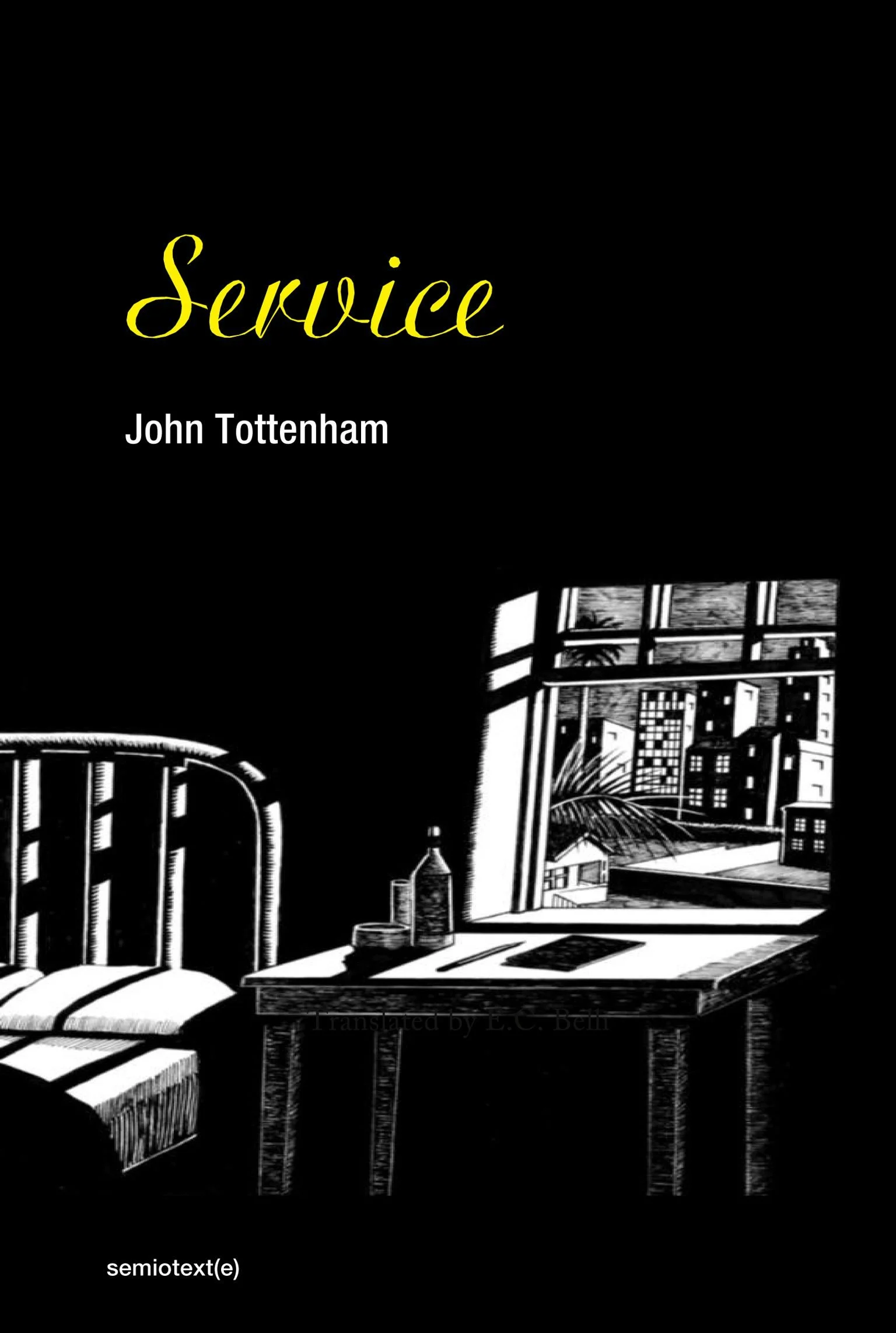
Waking up from the chilling high of a near-death sex game, Catt Dunlop travels to Albuquerque in 2005 to reinvest some windfall real-estate gains and reengage with something approximating “real life.” Aware that the critical discourse she has used to build her career as a visiting professor and art critic is really a cipher for something else, she hopes that buying and fixing slum buildings will bring her more closely in touch with American life than the essays she writes.

read more / order this book


The Making of the Indebted Man
Essay on the Neoliberal Condition

Maurizio Lazzarato
Translated by Joshua David Jordan

Debt—both public debt and private debt—has become a major concern of economic and political leaders. In The Making of the Indebted Man, Maurizio Lazzarato shows that, far from being a threat to the capitalist economy, debt lies at the very core of the neoliberal project. Through a reading of Karl Marx’s lesser-known youthful writings on John Mill, and a rereading of writings by Friedrich Nietzsche, Gilles Deleuze, Félix Guattari, and Michel Foucault, Lazzarato demonstrates that debt is above all a political construction, and that the creditor/debtor relation is the fundamental social relation of Western societies.
How do we extricate ourselves from this impossible situation? How do we escape the neoliberal condition of the indebted man? Lazzarato argues that we will have to recognize that there is no simple technical, economic, or financial solution. We must instead radically challenge the fundamental social relation structuring capitalism: the system of debt.

read more / order  this book

The Administration of Fear

Paul Virilio
Translated by Ames Hodges
With Bertrand Richard

We are living under the administration of fear: fear has become an environment, an everyday landscape. There was a time when wars, famines, and epidemics were localized and limited by a certain timeframe. Today, it is the world itself that is limited, saturated, and manipulated, the world itself that seizes us and confines us with a stressful claustrophobia. Stock-market crises, undifferentiated terrorism, lightning pandemics, “professional” suicides . . . . Fear has become the world we live in.

The administration of fear also means that states are tempted to create policies for the orchestration and management of fear. Globalization has progressively eaten away at the traditional prerogatives of states (most notably of the welfare state), and states have to convince citizens that they can ensure their physical safety.

read more / preorder this book

An Arab Melancholia

Abdellah Taïa
Translated by Frank Stock

I had to rediscover who I was. And that’s why I left the apartment. . . . And there I was, right in the heart of the Arab world, a world that never tired of making the same mistakes over and over. . . . I had no more leniency when it came to the Arab world. . . None for the Arabs and none for myself. I suddenly saw things with merciless lucidity. . . .
–An Arab Melancholia

Salé, near Rabat. The mid 1980s. A lower-class teenager is running until he’s out of breath. He’s running after his dream, his dream to become a movie director. He’s running after the Egyptian movie star, Souad Hosni, who’s out there somewhere, miles away from this neighborhood–which is a place the teenager both loves and hates, the home at which he is not at home, an environment that will only allow him his identity through the cultural lens of shame and silence. Running is the only way he can stand up to the violence that is his Morocco.

read more / order this book

Preliminary Materials for a Theory of the Young-Girl

Tiqqun, Associate Editor
Translated by Ariana Reines

The Young-Girl is not always young; more and more frequently, she is not even female. She is the figure of total integration in a disintegrating social totality.
–from Theory of the Young-Girl

First published in France in 1999, Preliminary Materials for a Theory of the Young-Girl dissects the impossibility of love under Empire. The Young-Girl is consumer society’s total product and model citizen: whatever “type” of Young-Girl she may embody, whether by whim or concerted performance, she can only seduce by consuming. Filled with the language of French women’s magazines, rooted in Proust’s figure of Albertine and the amusing misery of (teenage) romance in Witold Gombrowicz’s Ferdydurke, and informed by Pierre Klossowski’s notion of “living currency” and libidinal economy, Preliminary Materials for a Theory of the Young-Girl diagnoses—and makes visible—a phenomenon that is so ubiquitous as to have become transparent.

read more / order this book

The Femicide Machine

Sergio González Rodríguez
Translated by Michael Parker-Stainback

In Ciudad Juarez, a territorial power normalized barbarism. This anomalous ecology mutated into a femicide machine: an apparatus that didn’t just create the conditions for the murders of dozens of women and little girls, but developed the institutions that guarantee impunity for those crimes and even legalize them. A lawless city sponsored by a State in crisis. The facts speak for themselves.
—from The Femicide Machine


Best known to American readers for his cameo appearances as The Journalist in Roberto Bolano’s 2666and as a literary detective in Javier Marías’s novel Dark Back of Time, Sergio González Rodríguez is one of Mexico’s most important contemporary writers. He is the author of Bones in the Desert, the most definitive work on the murders of women and girls in Juárez, Mexico, as well as The Headless Man, a sharp meditation on the recurrent uses of symbolic violence; Infectious, a novel; and Original Evil, a long essay. The Femicide Machine is the first book by González Rodríguez to appear in English translation.
 
read more / order this book


Gilles Deleuze from A to Z

Gilles Deleuze, Claire Parnet and Pierre-Andre Boutang
Translated by Charles J. Stivale

Although Gilles Deleuze never wanted a film to be made about him, he agreed to Claire Parnet’s proposal to film a series of conversations in which each letter of the alphabet would evoke a word: From A (as in Animal) to Z (as in Zigzag). These DVDs, elegantly transtlated and subtitled in English, make these conversations available for English-speaking audiences? for the first time.

In dialogue with Parnet (a journalist and former student of Deleuze), the philosopher exhibited the modest and thrilling transparency that his seminal works (such as Anti-Oedipus and A Thousand Plateaus) reveal. The sessions were taped when Deleuze was already terminally ill; he and Parnet agreed that the film would not be shown publicly until after his death. The awareness of mortalityfloats through the dialogues, making them not just intellectually stimulating but also emotionally engaging. Because Parnet knew Deleuze so well, she was able to draw him out–as no one else had–to what might be the 1001st plateau: a place of brilliance, rigor, and charm.

read more / order this DVD


Bubbles

Spheres Volume I: Microspherology
Peter Sloterdijk
Translated by Wieland Hoban

If I had to place a sign of my own at the entrance to this trilogy, it would be this: let no one enter who is unwilling to praise transference and to refute loneliness.
–from Bubbles

An epic project in both size and purview, Peter Sloterdijk’s three-volume, 2,500-page Spheres is the late-twentieth-century bookend to Heidegger’s Being and Time. Rejecting the century’s predominant philosophical focus on temporality, Sloterdijk, a self-described “student of the air,” reinterprets the history of Western metaphysics as an inherently spatial and immunological project, from the discovery of self (bubble) to the exploration of world (globe) to the poetics of plurality (foam). Exploring macro- and micro-space from the Greek agora to the contemporary urban apartment, Sloterdijk is able to synthesize, with immense erudition, the spatial theories of Aristotle, René Descartes, Gaston Bachelard, Walter Benjamin, and Georges Bataille into a morphology of shared, or multipolar, dwelling–identifying the question of being as one bound up with the aerial technology of architectonics and anthropogenesis.

read more / order this book


ATTA

Jarett Kobek

Ours is a century of fear. Governments and mass media bombard us with words and images: desert radicals, “rogue states,” jihadists, WMDs, existential enemies of freedom. We labor beneath myths that neither address nor describe the present situation, monstrous deceptions produced by a sound bite society. There is no reckoning of actuality, no understanding of the individual lives that inaugurated this echo chamber.

In the summer of 1999, Mohamed Atta defended a master’s thesis that critiqued the introduction of Western-style skyscrapers in the Middle East and called for the return of the “Islamic-Oriental city.” Using this as a departure point, Jarett Kobek’s novel ATTA offers a fictionalized psychedelic biography of Mohamed Atta that circles around a simple question: what if 9/11 was as much a matter of architectural criticism as religious terrorism? Following the development of a socially awkward boy into one of history’s great villains, Kobek demonstrates the need for a new understanding of global terrorism. Joined in this volume by a second work, “The Whitman of Tikrit”–a radical reimagining of Saddam Hussein’s last day before capture–ATTA is a brutal, relentless, and ultimately fearless corrective to ten years of propaganda and pandering.

read more / order this book


Halstead Plays Himself

William E. Jones

Fred Halsted’s L.A. Plays Itself (1972) was gay porn’s first masterpiece: a sexually explicit, autobiographical, experimental film whose New York screening left even Salvador Dalí repeatedly muttering “new information for me.” Halsted, a self-taught filmmaker, shot the film over a period of three years in a now-vanished Los Angeles, a city at once rural and sleazy.

In Halsted Plays Himself, acclaimed artist and filmmaker William E. Jones documents his quest to capture the elusive public and private personas of Halsted–to zero in on an identity riddled with contradictions. Jones assembles a narrative of a long-gone gay lifestyle and an extinct Hollywood underground, when independent films were still possible, and the boundary between experimental and pornographic was not yet established. The book also depicts what sexual liberation looked like at a volatile point in time–and what it looked like when it collapsed.

read more / order this book